Acquisition
Calibrated ultrasonic transducers and low-noise analog front ends capture high-fidelity echo signals.

Non-destructive testing (NDT) inspects materials and components for internal flaws — without damaging the part. A&W brings AI to ultrasonic NDT, combining our deep strengths in transducers, analog/digital signal processing, and FPGA with modern machine learning to detect, classify, and characterize defects automatically.
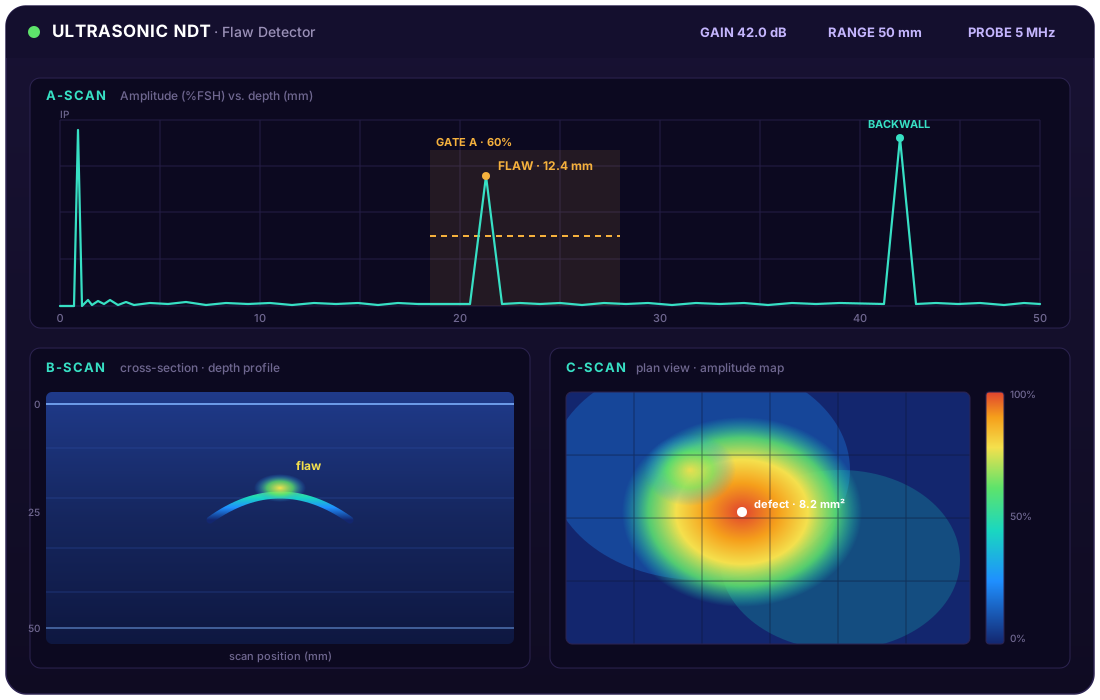
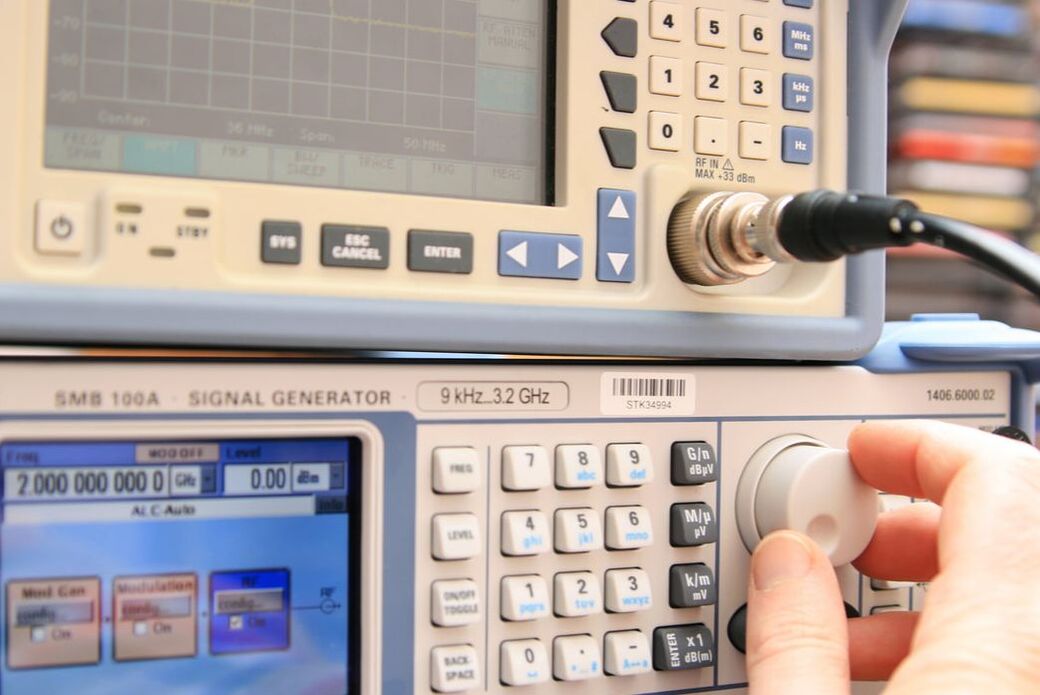
Ultrasonic waves are launched into a material; reflections from internal boundaries, cracks, voids, and inclusions are captured and analyzed. The result is a precise, repeatable picture of a component's internal integrity — essential for quality assurance, safety, and predictive maintenance.
Our NDT ultrasound system spans the full signal chain — and adds machine learning where it makes the biggest difference.
Calibrated ultrasonic transducers and low-noise analog front ends capture high-fidelity echo signals.
Real-time digital signal processing and FPGA acceleration handle high-speed, high-throughput acquisition.
Deep learning models flag and classify cracks, voids, and inclusions across A-scan, B-scan, and C-scan data.
Clear visualization and classification produce repeatable, auditable inspection records.
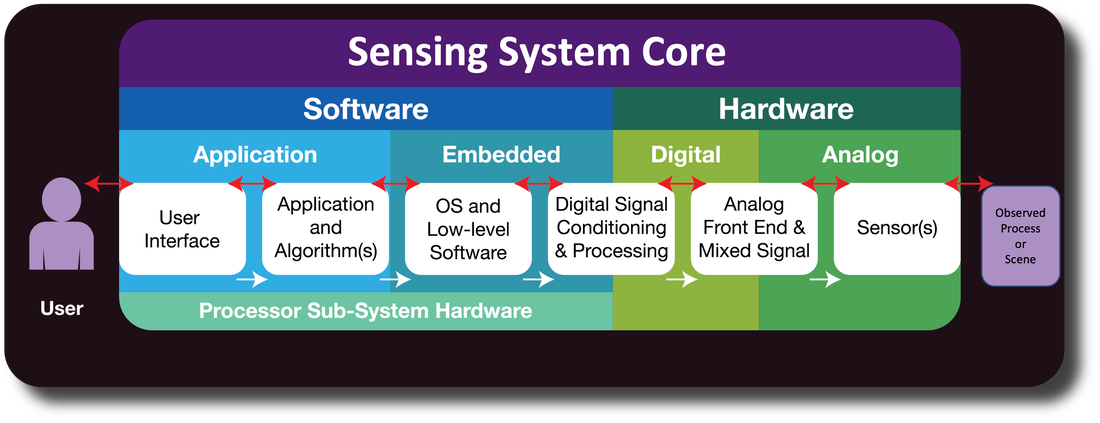
The same end-to-end sensing-system expertise we bring to medical devices powers our ultrasonic NDT — analog front end, digital processing, embedded software, and the application layer.
Automated analysis screens scans quickly, letting experts focus on the cases that matter.
Models trained on real scan data add a consistent second set of eyes, reducing operator fatigue and variability.
From a benchtop proof-of-concept to a rugged, field-deployable inspection system — built with our rapid-prototyping approach.
Tell us about your inspection challenge — materials, geometries, throughput, and defects of concern — and we'll help you build the right NDT ultrasound solution.